
Start with the symptom
Troubleshooting washing machine noises, vibration and unusual sounds in Yorkton, Saskatchewan.
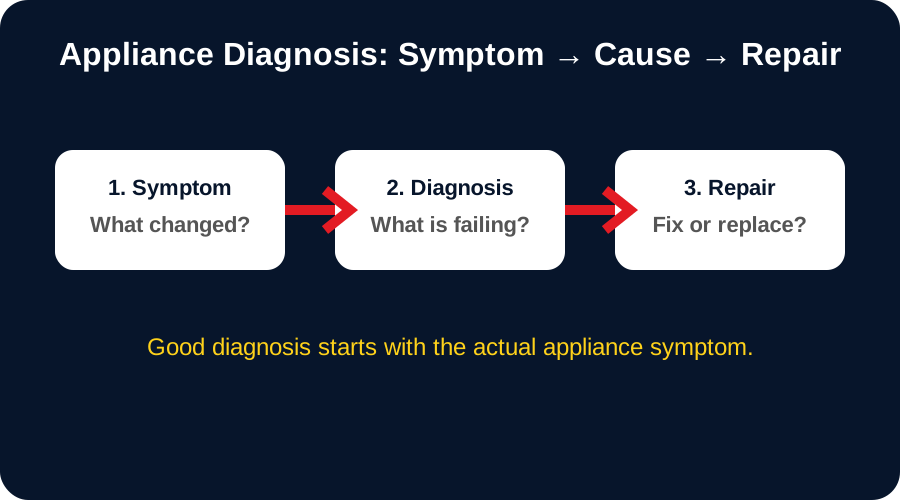
Useful things to check
- Identify the exact part of the cycle when the sound occurs.
- Note whether the washer is vibrating, walking or staying in place.
- Check for obvious objects caught in the tub or pump area when safe to do so.
- Avoid continuing to run a machine that is violently shaking or leaking.
- A short recording of the sound can help when the problem is intermittent.
Related Yorkton repair guides
Useful observations before service
- Record when the noise starts: fill, wash, drain, spin, tumble, cooling or heating.
- Note whether the sound changes with load or disappears when the appliance is empty.
- Look for obvious objects, loose panels or unusual vibration that can be safely observed.
- A short phone recording can be useful when the noise is intermittent.
What a technician may need to test
Depending on the model, diagnosis can involve checking power or control signals, measuring the relevant component, inspecting wiring and connections, verifying water or airflow, and confirming the appliance's sequence of operation. The exact procedure should follow the appliance design and service information rather than a one-size-fits-all internet answer.
That is also why the model number matters. Two appliances can show the same symptom while using different components or diagnostic procedures.
Clues that narrow “Washer Making Noise”
Washer symptoms should be tied to the cycle stage. A machine that fills but will not move into agitation has a different diagnostic path from one that drains but will not spin. Note the sequence, any lock behaviour, and whether the problem changes with load size.
Bring these details to service
- Brand and model number
- Exact symptom and when it appears
- Any error code
- Whether the problem is constant or intermittent
- A photo or short video when the symptom is difficult to reproduce